


Skip to content

My Profile | Home | Site Map | Privacy Policy


If you have heartburn more than twice a week, ask your doctor about ZEGERID!

This website is dedicated to helping people with frequent heartburn. Frequent or chronic heartburn may be a sign of acid reflux disease, which can lead to more serious medical problems such as erosive esophagitis. Heartburn due to acid reflux disease needs strong heartburn medication, such as a proton pump inhibitor (PPI). That's why we want to introduce you to ZEGERID, the First and Only Immediate-Release oral PPI for heartburn treatment due to acid reflux disease.

Treat your frequent heartburn and acid reflux symptoms

ZEGERID is a proton pump inhibitor (PPI). PPIs are highly effective treatments for heartburn due to acid reflux disease (also known as gastroesophageal reflux disease or GERD). ZEGERID is the First and Only Immediate-Release oral PPI, providing immediate release and continued acid control. In short, ZEGERID gets into your bloodstream rapidly, and one dose a day provides continued acid control.

ZEGERID: Effective treatment for heartburn & acid reflux disease

So, if you have frequent heartburn symptoms, take action. Explore our website to learn more about heartburn, acid reflux symptoms, acid reflux disease, and ZEGERID. Fill out our questionnaire to see if ZEGERID may be the right heartburn medication for you. Then visit your doctor, discuss your symptoms, and take along our ZEGERID Savings Coupon. If your doctor says you have acid reflux disease, ask about ZEGERID, the First and Only Immediate-Release oral PPI, as an option for your acid reflux treatment.

Get the ZEGERID Savings Coupon and take it to your doctor.

Your Heartburn | Why Choose ZEGERID?
For ZEGERID Patients | Savings and Information | Important Safety Information

Product Description
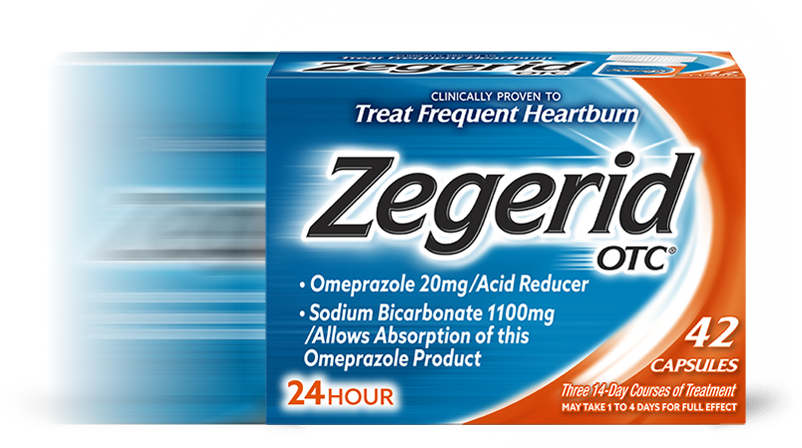
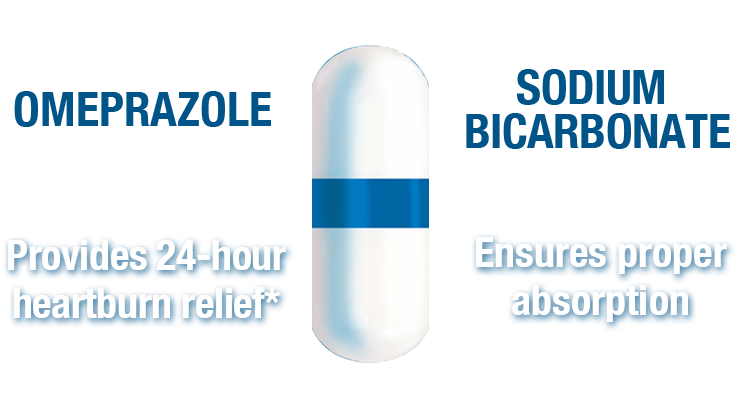
ZEGERID® contains omeprazole, a proton pump inhibitor (PPI), and sodium bicarbonate, an antacid.

IMPORTANT SAFETY INFORMATION FOR PATIENTS TAKING ZEGERID

What is ZEGERID for?
ZEGERID is indicated for the treatment of heartburn and other symptoms of acid reflux disease. ZEGERID is also used to treat and maintain the healing of erosive esophagitis, which may result from acid reflux. ZEGERID is also indicated for the short-term treatment of active duodenal ulcer and of active benign gastric ulcer.

Remember, only your doctor can diagnose your condition and tell you whether a prescription for ZEGERID is right for you.

Ask your doctor if ZEGERID is right for you
Only your doctor can tell if you have acid reflux disease. And only your doctor can prescribe a treatment for you. Take notes of your symptoms. What symptoms do you have? When do you have them? Then ask your doctor if ZEGERID is right for you.

How to take ZEGERID¹
ZEGERID comes in capsules or a powder for oral suspension that you mix with water. Both the capsule and the powder are immediate release, in 40 mg and 20 mg strengths.

ZEGERID should be taken once a day on an empty stomach. You should wait at least one hour after taking ZEGERID before having a meal.

Side effects¹
Side effects of ZEGERID include headache, diarrhea, and abdominal pain. Contact your healthcare professional if these or other side effects persist or become bothersome. Relief of your symptoms while on ZEGERID does not rule out other serious stomach conditions.

Sodium content¹
ZEGERID Capsules contain 304 mg of sodium. ZEGERID Powder for Oral Suspension contains 460 mg of sodium. These amounts are comparable to the amount of sodium in an ounce of corn flakes (350 mg). A single capsule is 13% of the American Heart Association's recommended daily intake of 2,300 mg of sodium. A single dose of powder for oral suspension is 20% of the American Heart Association's recommended daily intake of 2,300 mg of sodium. For people with heart failure, the American Heart Association's recommended sodium intake is no more than 2,000 mg per day. These amounts should be taken into consideration by anyone on a sodium restricted diet. People with metabolic alkalosis and hypocalcemia should not take ZEGERID.

Due to the sodium content in ZEGERID, two 20 mg doses should not be used in place of one 40 mg dose.

ZEGERID should not be taken by anyone with a known hypersensitivity to any component of the formulation.

Pregnant women and nursing mothers¹
There are no clinical studies of ZEGERID in pregnant women or nursing mothers. Women who are pregnant or nursing should talk to their physicians before using ZEGERID.

Reference: 1. ZEGERID Prescribing Information. Santarus, Inc. January 2010.

To learn more about ZEGERID, see full prescribing information and talk with your doctor.

Please consult with your healthcare professional to see if ZEGERID is right for you. The content of this website is not a substitute for professional medical advice and should not be interpreted as treatment recommendations or relied on for medical diagnosis or treatment. Please see complete Legal Disclaimer.